Research and Development / Life Science
Our focus area in the field of life sciences:
bioykb life science AG is a leader in the field of research, diagnostics and therapy development for stress and tension-related hair loss, Alopecia Contenaionalis, and the accompanying pain irritations on the scalp, Trichodynia.
Causes of Alopecia Contentionalis
The hair matrix cells produce keratin, the central building block of hair. They are extremely sensitive to blood and oxygen deprivation. The cells in our hair follicles that produce keratin are the hair matrix cells. They form approximately 35 meters of scalp hair every day. To do this, they divide about eight times more frequently than normal skin cells. Consequently, they are highly sensitive to changes in local metabolic quality.
Stressors and causal chain
Stress is known to be one of the main causes of hair loss. Under stress and during periods of high concentration, the upper scalp muscles are very often tense.
The arteries and the finest arterioles, which run directly under the scalp and supply the hair roots with blood and oxygen, are strongly compressed.
The scalp and hair roots are supplied with blood via a fine system of arteries and extremely thin arterioles that branch out across the entire top of the skull. Blood outflow occurs via the finest venules and veins. These delicate blood vessels are affected by tension in the upper cranial muscles.
Consequences for local metabolism
The blood and oxygen supply (PO²) to the hair roots falls below a biologically critical threshold. The metabolism of the hair matrix cells can no longer function properly.
In cases of blood and oxygen deficiency, DHT can no longer be properly metabolized. It increasingly accumulates in the hair roots.
This type of hair loss is scientifically called tension-related hair loss, or alopecia contentionalis.
It occurs in both men and women and can be specifically diagnosed and treated.
Tension in the upper skull muscles is often associated with a discomfort on the scalp, known as trichodynia. Trichodynia is usually perceived as tightness, burning, or tingling in the scalp area.

AC therapy
against
Alopecia Contentionalis
Graphical overview of
Research findings on
Causal chain of hair loss

AC therapy
against stress and tension-related hair loss:
Alopecia Contentionalis
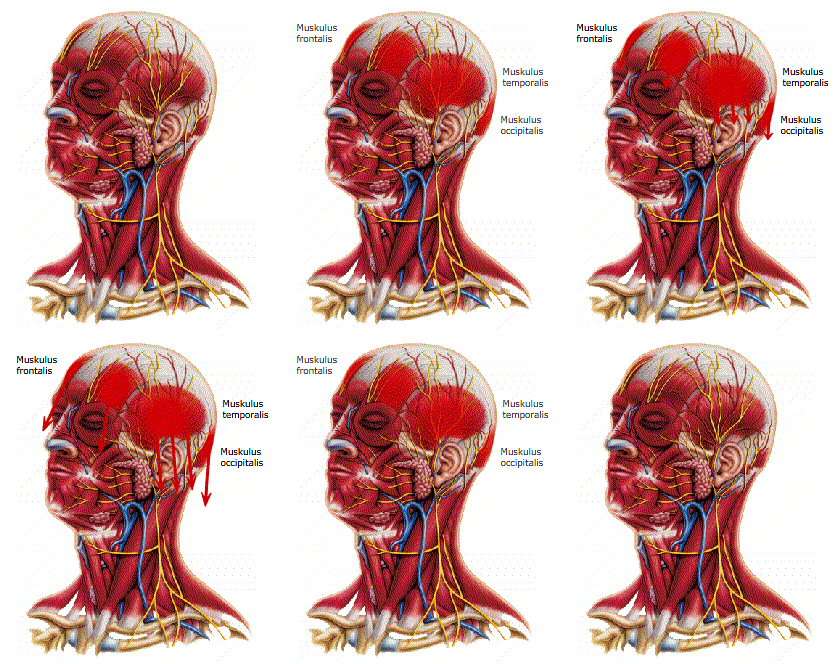
Tension in the upper skull muscles
are a major trigger for hair loss
(Alopecia Contentionalis)
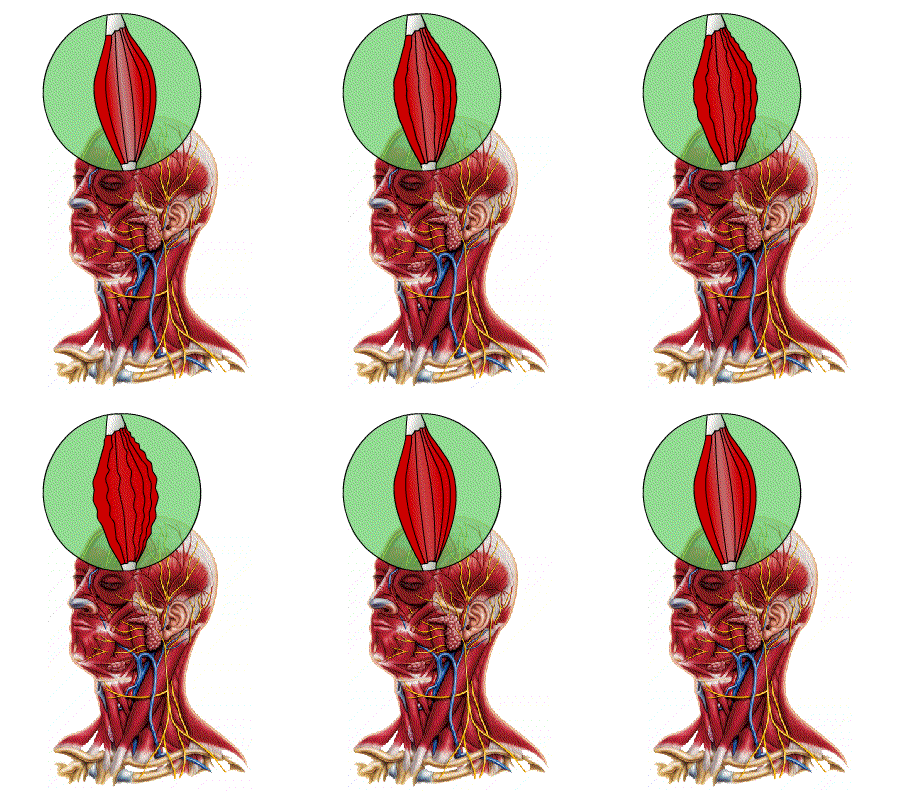
Under stress and tension
These muscles are often tensed intensely
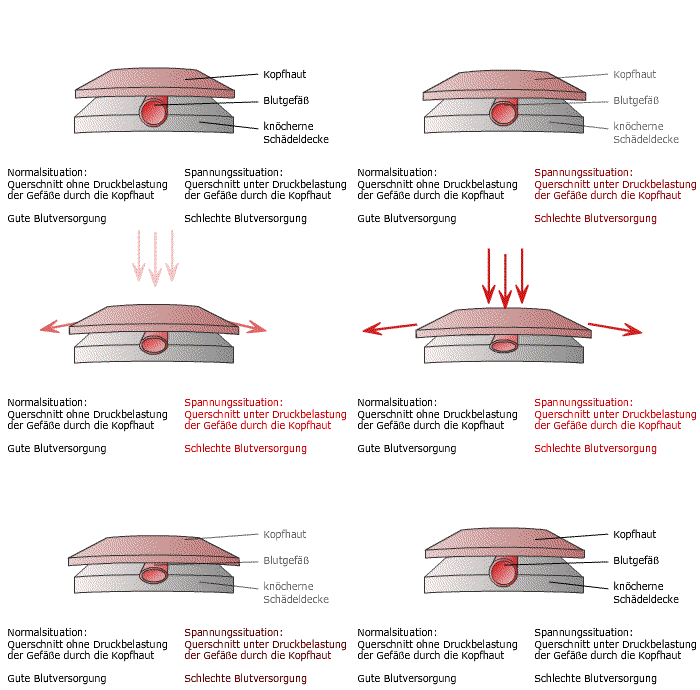
The extremely fine blood vessels,
which run directly under the scalp,
are compressed.
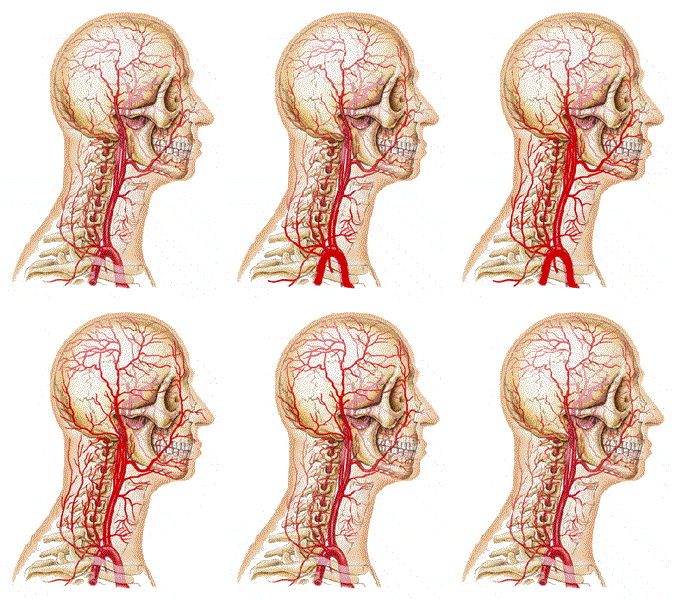
Blood and oxygen
can no longer be sufficient
to reach the hair roots
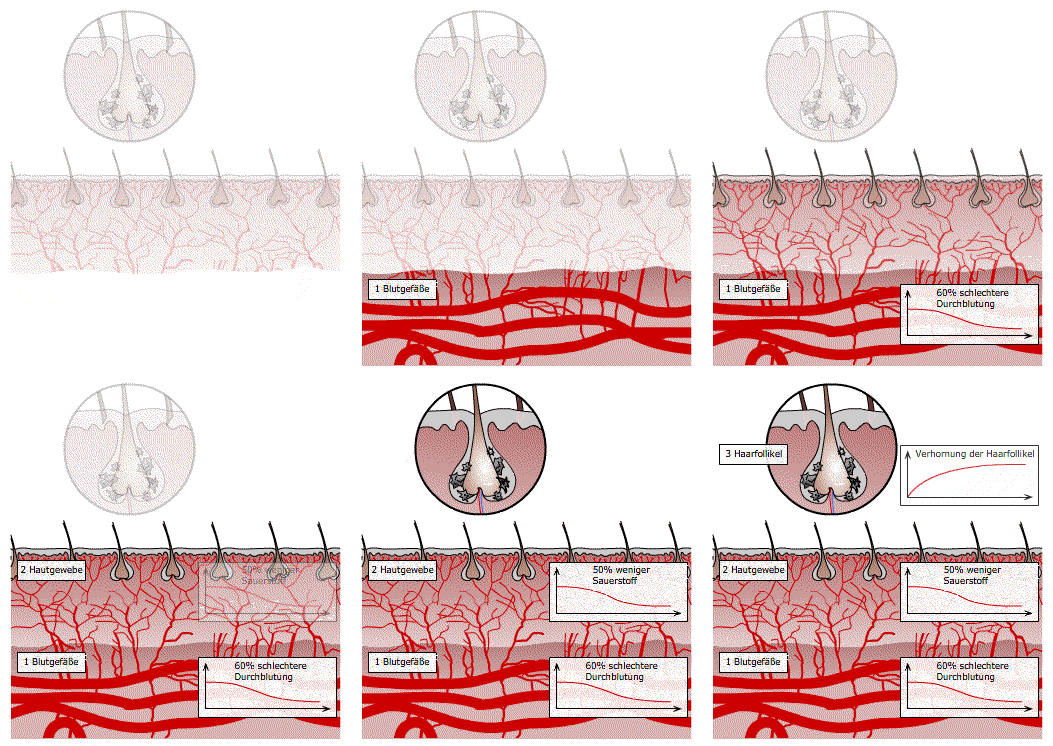
The hair roots are extremely sensitive.
on the reduced supply of blood and oxygen.
The androgenic hormone DHT can no longer be metabolized sufficiently.
The hair follicles become keratinized and degenerate.

Stress- and tension-related hair loss,
Alopecia Contentionalis,
always first appears in the areas,
in which the tension of the skull muscles
the highest
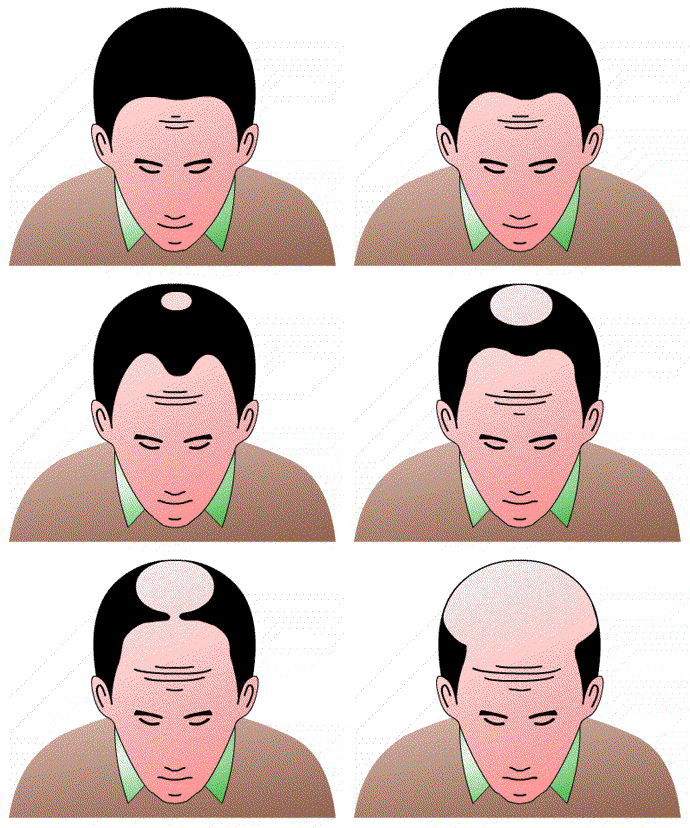
The following is for Alopecia Contentionalis
typical patterns, starting in the areas
Receding hairline and tonsure

Using an EMG measurement
the upper skull muscles
can be done at the specialist
a meaningful diagnosis
about the degree of tension
be created.
The values of local muscular tension
They often differ by dimensions
above normal

AC therapy
tackles stress-related hair loss
directly at its root cause, with lasting results.
With AC therapy using medication
(relaxation of tense scalp muscles)
each treatment has an effect lasting many months.
Blood and oxygen can once again
reach the hair roots.
The tightness, burning and tingling
of the scalp usually disappears
within a few days.
Hair loss can be stopped
within a few weeks.
Hair that has already fallen out
can grow back.
A clinical study confirms
the high effectiveness
in approximately 80% of patients.